
25.11.2026 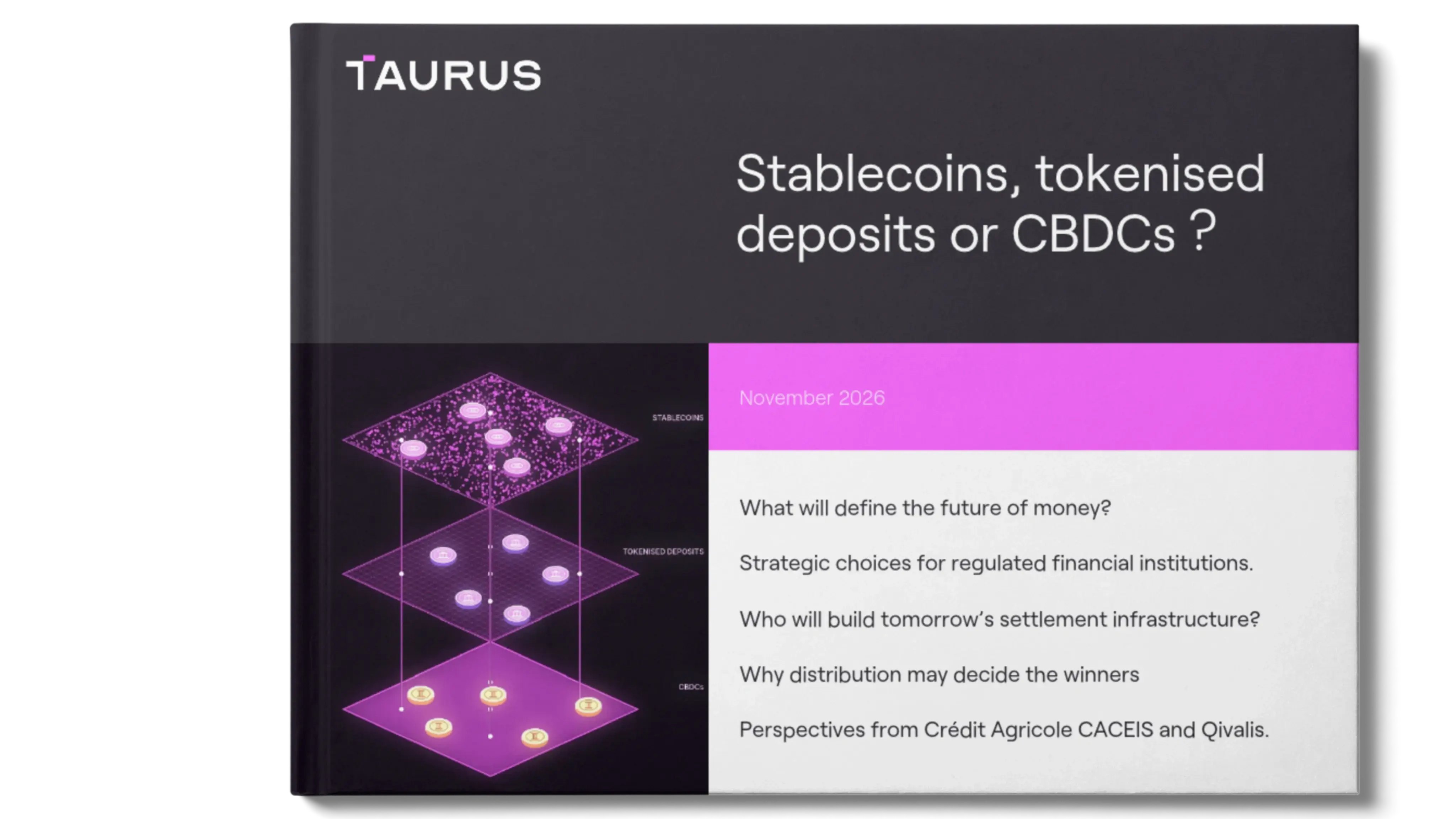

The Future of Digital Money
Stablecoins, tokenised deposits and central bank digital currencies each have their own role. Central bank money settles transactions between institutions, tokenised deposits serve banks' own clients, and stablecoins serve open and cross-border networks.
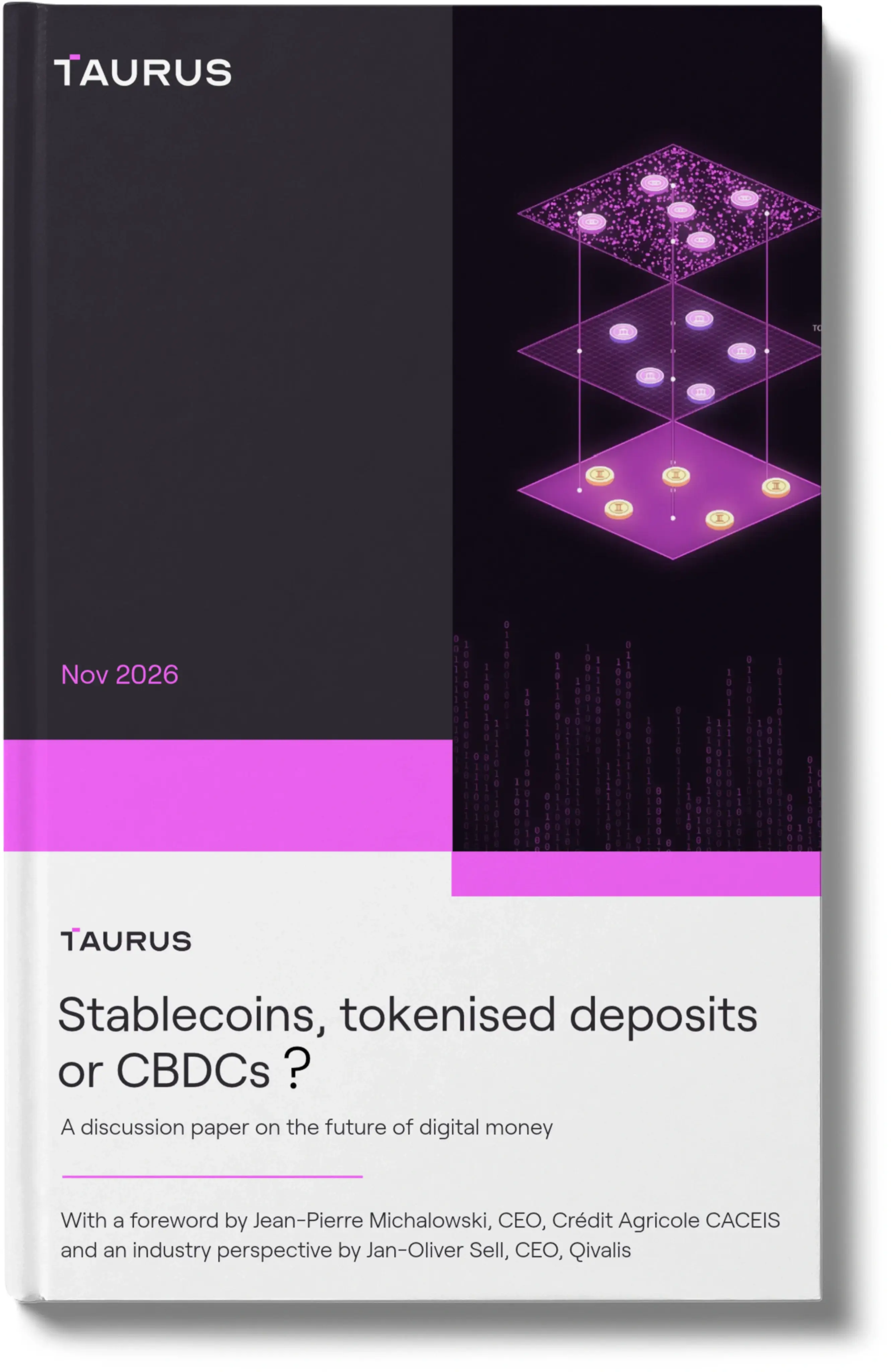
The paper explains how each form of digital money works, who earns what, which rules apply and where central banks stand. It opens with a foreword by Jean-Pierre Michalowski, CEO of Crédit Agricole CACEIS, on the launch of the euro stablecoin EURXT. It also includes an industry perspective by Jan-Oliver Sell, CEO of Qivalis, the euro stablecoin issuer backed by 37 European banks.
In this paper, you will:
- Understand the role of each form of digital money, and why banks increasingly issue stablecoins too, alone or as a consortium
- See how stablecoin rules are converging across the US, EU, UK, Hong Kong and the UAE, and where they still differ
- Learn why the client relationship is the scarce asset, and what that means for banks
- Find out what atomic settlement removes, and why settlement risk moves rather than disappears
- Review the shared settlement layer that market infrastructures are building, from Pontes and Helvetia to Swift's shared ledger
Download the whitepaper.
Share on
This newsletter service is protected by reCAPTCHA and the Google
Privacy Policy
and
Terms of Service
apply.



 Taurus-PROTECT Custody
 Taurus-CAPITAL Tokenization
 Taurus-PRIME Trading
 Taurus-NETWORK Collateral
